The mountains of Epirus are home to some of the most fascinating wildlife in Europe. Remote forests, rocky ridges, and deep gorges provide shelter to iconic species that thrive away from human presence. Meeting them, even from afar, adds an unforgettable dimension to any journey through this wild corner of Greece.
Brown Bear
The brown bear is the largest land mammal in Europe and one of Epirus’ most symbolic creatures. Living up to 20–25 years, the bear embodies strength, wild beauty, and solitude. Despite its size, it is surprisingly agile and intelligent. Mostly a solitary wanderer, it moves quietly at dawn, dusk, or during the night.
The bear’s senses of hearing and smell are extremely well developed, helping it forage across vast territories. With a varied diet, it thrives on forest fruits such as blueberries, wild strawberries, apples, pears, acorns, and beech nuts, but also bulbs, roots, and grasses. Fully protected by national legislation, the brown bear remains a powerful emblem of Epirus’ wilderness.
Wolf
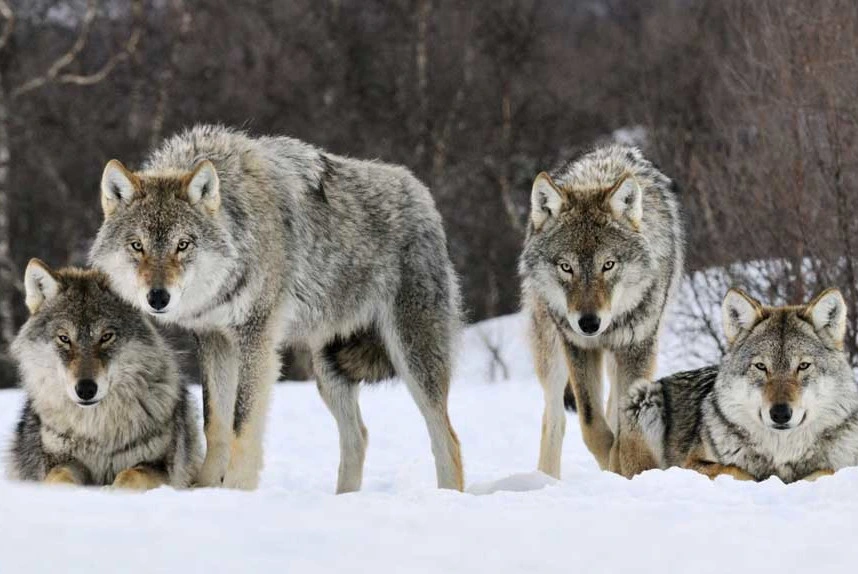
The wolf, ancestor of the domestic dog, is another key species of Epirus’ ecosystems. Weighing between 15 and 60 kilograms, it resembles a stocky wild dog but with sharper instincts and unmatched resilience. Wolves live and hunt in packs, communicating with each other through howls that echo hauntingly through the valleys.
They feed on a wide range of prey, from slow-moving deer and wild goats to agile hares, playing a vital role in keeping nature’s balance. Though often misunderstood, the wolf is an essential guardian of the mountains.
Golden Eagle
Graceful and commanding, the golden eagle is one of the most iconic birds of prey in Europe. With a wingspan exceeding 2.3 meters, this large raptor rules the skies above Epirus. It prefers mountainous areas where it nests on steep rocky cliffs, far from human disturbance.
Golden eagles maintain vast territories — often only a single breeding pair will occupy an entire mountain range. Though protected under both Greek and EU law, their populations are declining, making every sighting a rare and awe-inspiring moment for hikers and nature lovers alike.
Chamois (Agriogido)
The Balkan chamois, locally called Agriogido (“wild goat”), is one of the most iconic mountain-dwelling animals of Greece. Agile and sure-footed, it moves effortlessly across steep cliffs and rocky ridges that few other animals dare to climb. Its ability to leap gracefully from rock to rock has made it a symbol of the high mountains.
The chamois usually lives in small herds, browsing on grasses, shrubs, and alpine plants. Shy and elusive, it avoids human contact and is most often spotted at dawn or dusk by quiet hikers. Though its populations once declined due to hunting, conservation efforts have helped protect this rare species. Spotting an Agriogido in the wild is a rewarding reminder of the untouched character of Epirus’ landscapes.
The Asproparis – The Long-Distance Traveler
Among the skies of Epirus, one of the rarest and most symbolic visitors is the Asproparis (Egyptian vulture). Every spring, this remarkable bird travels nearly 6,000 kilometers from Africa to reach its summer refuge around Konitsa, nesting on the steep cliffs of the region. Recognizable by its white plumage and yellow face, the Asproparis is Greece’s smallest vulture and an enduring symbol of nature’s resilience. Its return each year marks the changing of the seasons — a quiet reminder of the deep connection between distant lands and these mountain ecosystems.
It is also one of the few bird species known to use tools: the Asproparis can crack eggs with stones or drop turtles from the sky to break their shells. Even more impressively, these birds return to the same nesting site almost every year, navigating across continents to find the very same cliff ledge — a true marvel of instinct and precision.
Sadly, their numbers have declined dramatically. Today, only five or six pairs remain in Greece, and the species is now listed as Endangered. Major threats include electrocution from power poles, disturbance of nesting sites, collisions with wind turbines, and poisoning from baits left for other animals.
The presence of the Asproparis in Epirus reminds us that these mountains are not only a refuge for hikers, but also a sanctuary for life that depends on our respect and protection.